Commercial Access Ramps for Government Buildings: Improving Accessibility and Safe Building Access
What You’ll Learn
In this article, you’ll learn:
- Why accessibility compliance is essential for federal, state, and local government buildings
- Key ADA, ABA, and IBC requirements that impact commercial access ramp design
- How modular access ramps help public facilities improve accessibility without major renovations
- The benefits of commercial aluminum ramp systems for government properties
- Additional safety solutions that support government facility operations beyond building entrances
- What facility managers should consider when selecting an ADA-compliant ramp system
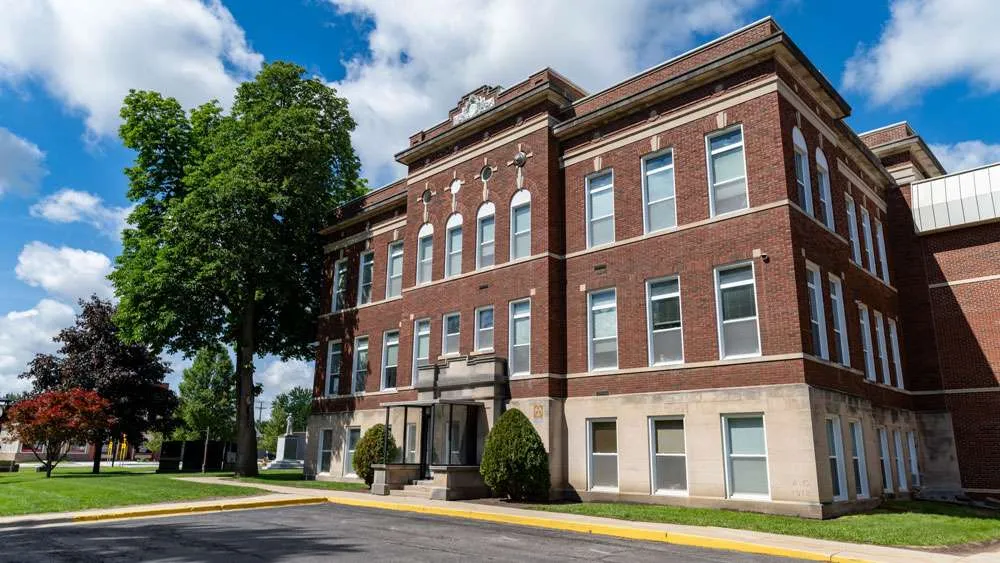
Government buildings are meant to serve everyone, and they are practically everywhere: libraries, schools, police precincts, post offices, motor vehicle bureaus, courthouses, city and town halls, veterans’ hospitals, fire stations, dispatch centers, and this winter, do not forget snowplow garages.
Ensuring that everyone, including employees and visitors with mobility challenges, has safe, convenient access to these facilities is a fundamental responsibility of public institutions. Modular commercial access ramps for government buildings are an effective way to improve government facility accessibility while navigating legal requirements, building codes, and the practical challenges of retrofitting aging infrastructure or changing site conditions.
For many municipalities and government agencies, installing accessible entrances is not only a regulatory requirement but also an important step toward providing equal access to public services. Commercial access ramps help remove physical barriers while supporting compliance with established accessibility standards.
The Mandate for Accessibility in the Public Sector
The 1968 Architectural Barriers Act (ABA) established accessibility requirements for federal government-owned and leased buildings. The Americans with Disabilities Act (ADA) Title II became law in 1990 and requires state and local governments to make their programs, services, and activities accessible to people with disabilities. Municipalities also rely on Chapter 11 of the International Building Code (IBC) for accessibility standards.

Key Requirements Include:
- Maximum slope of 1:12 (1 inch of rise for every 12 inches of run), a grade of 8.33%.
- Ramp clear width of at least 36 inches.
- Each ramp run must have a level landing at the top and bottom, with a minimum clear length of 60 inches.
- Landings at changes in direction must be at least as wide as the ramp and provide a sufficient turning space.
- Edge protection (e.g., curbs, wheel guards) at least 2 inches high is required to prevent wheels from slipping off the ramp.
- The ramp surface must be firm, stable, and slip-resistant, with appropriate traction for wet conditions and outdoor use.
For facility managers, this makes accessibility upgrades both a compliance obligation and an investment in public service. ADA ramps for government buildings and related safety improvements help facilities meet these requirements and demonstrate a genuine commitment to inclusivity.
Because accessibility regulations can vary based on facility type, ownership, and jurisdiction, government organizations should work with qualified accessibility and safety professionals to evaluate site-specific requirements before implementing improvements.
How to Create Accessible Government Buildings
Older, often historic government buildings were constructed before modern accessibility regulations were enacted. Retrofitting entrances can be challenging when concrete construction, limited space, landmark architecture, or difficult terrain are involved. Making these changes in an occupied, active public building adds another layer of complexity.

Government building access ramps provide a practical, compliant alternative to major structural modifications. They address space, terrain, and historic status without a full-scale construction project that can take weeks to complete.
Modular systems can be configured to accommodate different building layouts, elevations, and available space. Straight, L-shaped, switchback, and custom configurations provide accessible routes while minimizing disruption to existing operations. Prefabricated components are assembled with bolts rather than requiring welding or heavy construction equipment. Since the ramps do not attach directly to existing structures, they do not compromise historic buildings.
This flexibility makes modular ramp systems particularly valuable for government facilities that must balance accessibility improvements with budget constraints, operational continuity, and preservation requirements.
Modular Solutions for Public Facilities
Accessibility ramps for government buildings need to withstand frequent use and changing weather conditions. These commercial-grade systems have lightweight, corrosion-resistant aluminum floor frames, fiberglass mesh with exceptional slip resistance, and a rugged tread design that channels water.
The 42-inch-high balustrade, which meets OSHA standards for walking surfaces, is powder-coated for durability and architectural appeal. “Warm-to-touch” PVC handrail tube, adjustable supports, and level landing platforms create dependable access for wheelchair users, people using mobility aids, and other visitors.
Safety gates and removable floor panels for servicing drains underneath or performing other maintenance are available as options.
Modular ramps for government buildings are also adaptable. Because sections can be reconfigured, organizations can modify an access route if an entrance changes, a facility is renovated, or site conditions evolve. This makes commercial modular ramps ideal for government properties where long-term flexibility is important.
In regions that experience snow, ice, and seasonal weather extremes, durable slip-resistant ramp surfaces can help support safer access throughout the year while reducing maintenance concerns.
Accessibility and Safety Beyond the Entrance
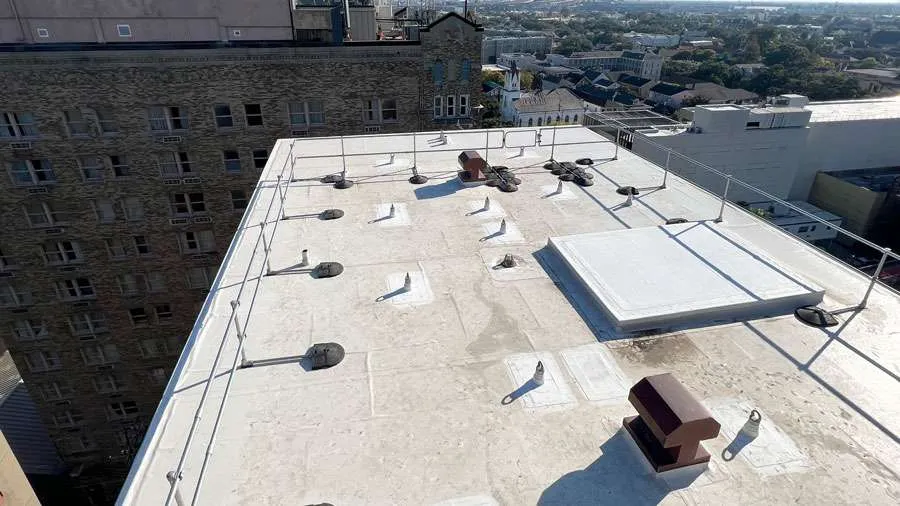
Enhancing public building accessibility does not end at the front door. Government facilities frequently require maintenance personnel and contractors to access rooftops, mechanical equipment, building façades, and other elevated areas. These activities introduce a separate set of fall hazards.
Rooftop guardrails provide OSHA-compliant fall protection around exposed roof edges. Featuring counterweight bases that do not penetrate the roof membrane, they protect multiple workers without their direct involvement or special training.
Where guardrails are not practical, or already in place, rooftop anchors provide connection points for lifeline systems.


Mobile anchors for flat or low-sloped roofs can be assembled and disassembled for infrequent or temporary tasks.
Tieback (rigid post) anchors for permanent installation can support suspended-access applications such as façade maintenance, window washing, and painting.
By evaluating facility accessibility and worker safety together, government organizations can develop comprehensive site safety programs that protect both building occupants and maintenance personnel.

See Us for Your Safety Solutions
Whether the need involves a new entrance ramp, a retrofit for an older facility, or improvements to rooftop safety, properly engineered systems can help create accessible government buildings that are safer, more functional, and better prepared for future needs.
When selecting ADA-compliant ramps for government buildings, facility managers should evaluate the building layout, applicable codes, site conditions, anticipated traffic, and future accessibility requirements. These modular systems can be reconfigured as needs evolve, which is often necessary for accessibility improvements for government buildings.
Working with an experienced provider can help streamline the design and installation process while ensuring the finished system aligns with accessibility standards and site-specific requirements.
If you are responsible for safe, compliant wheelchair access for your government facility, contact Lighthouse Safety for safety solutions. We will discuss your regulatory concerns and what it will take to comply. Our services encompass everything you need, from design, engineering, and fabrication to installation, training, inspections, and other support.
Frequently Asked Questions
What is the ADA requirement for a government building ramp?
ADA accessibility guidelines generally require ramps to have a maximum slope of 1:12, a minimum clear width of 36 inches, level landings, edge protection, and slip-resistant walking surfaces. Additional requirements may apply based on the specific facility and project.
Can modular ramps be used on historic government buildings?
Yes. Modular access ramps are often suitable for historic government buildings because they can be installed with minimal impact on existing structures and can frequently be removed or reconfigured if needed.
Why are modular access ramps a good option for government facilities?
Modular ramps provide a cost-effective, flexible solution for improving accessibility. They can be configured to fit different site conditions, installed with minimal disruption, and adapted as facility needs change.
What materials are commonly used in commercial access ramps?
Commercial accessibility ramps often use corrosion-resistant aluminum framing combined with durable, slip-resistant walking surfaces designed for outdoor use and changing weather conditions.
Are access ramps required for government buildings?
Federal, state, and local government facilities must provide accessible access to programs, services, and public spaces. Ramps are one common solution when elevation changes create barriers to entry.
What should facility managers consider when selecting a commercial access ramp?
Important considerations include accessibility compliance requirements, building layout, site conditions, expected pedestrian traffic, maintenance needs, future expansion plans, and overall lifecycle value.
Can accessibility improvements help reduce liability risks?
Accessibility improvements can help government organizations address known access barriers, support regulatory compliance efforts, and improve safety for visitors, employees, and contractors.