Manufacturing facilities face some of the most challenging workplace safety risks, particularly when employees or contractors must work at height. This article explains the most common fall hazards in manufacturing plants, OSHA-compliant fall protection solutions, and practical ways manufacturers can reduce injuries, improve compliance, and protect workers.
Compared to the “sweat shops” of the late 19th and early 20th centuries, notably the tragic Triangle Shirtwaist factory fire, a modern manufacturing plant is a marvel of cleanliness, efficiency, and employee amenities.
Yet, today’s factories have their own complex set of exposures. From servicing large production machinery to navigating rooftop hazards like skylights, maintenance teams and outside contractors face a host of fall risks. By combining “active” and “passive” fall protection, companies can help ensure manufacturing workplace safety, protecting workers while bolstering productivity and regulatory compliance.
Key Takeaway: The most effective manufacturing fall protection programs combine hazard assessments, passive engineering controls, active fall arrest systems, employee training, and regular inspections to reduce workplace injuries and OSHA violations.
Three of the Most Common Fall Hazards
Understanding how to reduce fall hazards in manufacturing starts with recognizing major risk factors. Effective fall protection for manufacturing facilities requires evaluating every area where employees may be exposed, not just the obvious ones, such as roof edges.

#1. Above Large Machinery & Vehicles
Since workers often need to work above production equipment to perform maintenance or loading/unloading operations, safe access to manufacturing equipment is essential. Industrial fall protection systems can prevent workers from sustaining an injurious slip-and-fall and from damaging expensive assets.
These elevated work areas often include conveyors, processing equipment, storage tanks, trailers, and specialized machinery where falls can result in serious injuries, costly downtime, and equipment damage.
#2. Elevated Workstations
From loading docks to mezzanines and inventory racks to HVAC units on rooftops, work-at-height tasks are common. Workers need secure, ergonomic access that is safer and more efficient than ladders, which require three points of contact.
Manufacturers should evaluate all elevated workstations to ensure employees have safe access solutions that minimize fall risk while maintaining productivity and operational efficiency.
#3. Skylights & Roof Openings
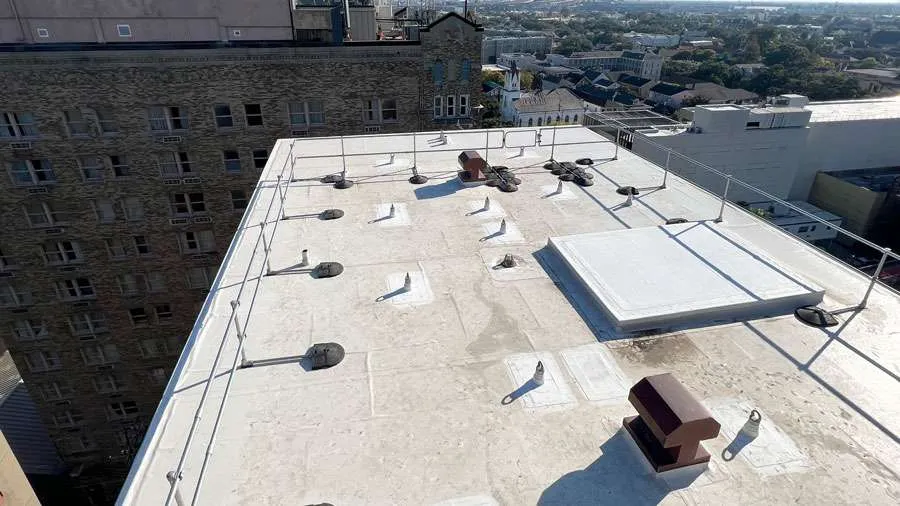
For maintenance crews accessing the roof, skylights are a common overlooked hazard. OSHA considers skylights a literal “hole” in the roof because they cannot necessarily support the weight of even one worker. Hence, skylights and any other roof openings must be protected.
Because skylights often blend into the roof surface, they can present a hidden fall hazard for employees, contractors, and service technicians performing rooftop maintenance.
Passive and Active Engineering Controls for Safe Access
The most effective way to manage a hazard is to eliminate it entirely or prevent exposure through physical barriers. These are known as “passive” fall protection systems because they provide reliable, compliant manufacturing safety solutions that require no action by the worker or specialized training to be effective.
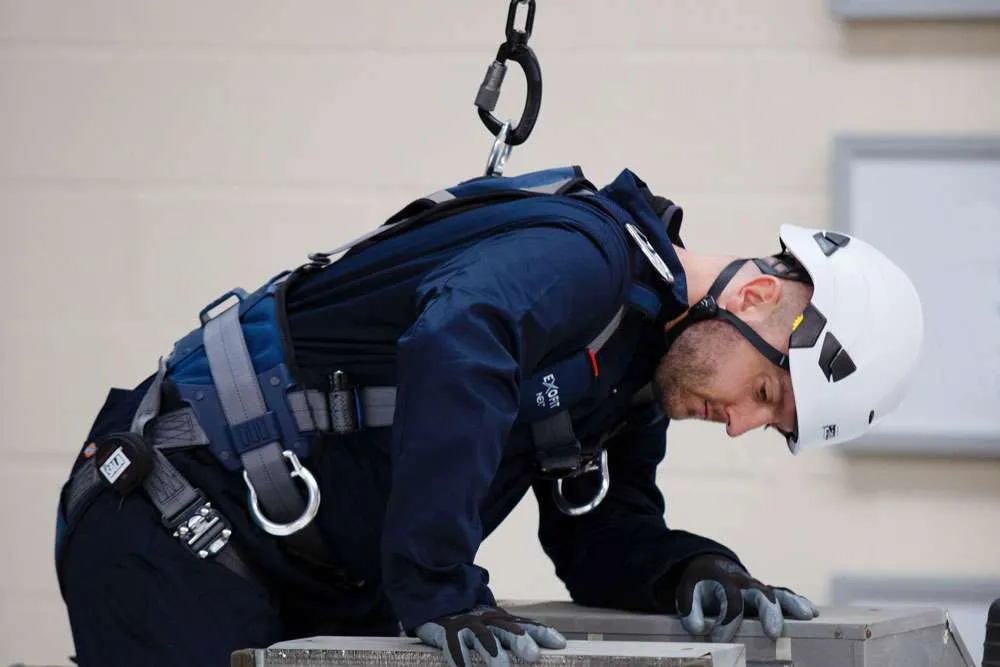
However, passive protection, notably guardrails, is not always possible or practical. “Active” fall arrest systems, harnesses, lanyards, lifelines, connectors, and anchorages, combined with training and regular equipment inspections, become necessary.
The best fall protection system for manufacturing facilities typically combines passive protection and active fall-arrest systems to create multiple layers of safety, rather than relying on either approach alone.
From an OSHA hierarchy of controls perspective, passive systems are generally preferred because they reduce worker exposure without requiring continuous employee action. Active systems provide essential protection when workers must access areas where fixed barriers are impractical.
Active Protection for Tasks from Above
Technicians frequently need to access elevated conveyors, process equipment, tanks, and other large equipment, as well as inspect, maintain, and load/unload trailers. This work from above requires freedom of movement that passive systems cannot provide. An active fall arrest system is necessary.
Rigid rail fall protection systems are ideal for many industrial environments. An overhead rigid rail allows workers to move along a fixed track while remaining continuously attached to an anchorage point. Unlike flexible cable systems, a rigid rail system does not deflect under load, which minimizes the fall-arrest distance and eliminates the swing-fall “pendulum effect.” This is critical in low-clearance areas.
For manufacturing plants seeking a fall protection solution that balances worker mobility and safety, rigid rail systems can provide continuous tie-off and dependable protection in maintenance-intensive environments.
Rigid rail is mounted overhead to keep floor space clear, offering a hands-free solution that supports industrial maintenance fall protection by keeping workers connected throughout the job. These modular rigid rail systems are designed to meet OSHA and ANSI standards.

Elevated Platforms for Passive Protection
Industrial access platforms are an ergonomic and effective passive solution for elevated work at loading docks, mezzanines, on large machinery, and when servicing HVAC units and other equipment on the rooftop. Relying on ladders or makeshift scaffolds to reach elevated areas increases the likelihood of slips, trips, and falls. Maintenance access platforms solve this by providing stable, OSHA-compliant work surfaces that enable technicians to work hands-free.
They feature anti-slip aluminum or glass-reinforced nylon steps and platform decks that are self-draining to prevent the accumulation of shop fluids or moisture. Constructed of strong, durable, corrosion-resistant aluminum or galvanized steel, platforms have integrated guardrails for added fall protection.
Static (fixed), mobile, and custom access platforms meet a full range of applications, matching specific workstation needs and enhancing manufacturing maintenance safety plus worker confidence.

Custom-engineered access platforms can also improve maintenance efficiency by reducing setup time and providing safer, more consistent access to equipment that requires routine service.
Multiple Options to Address Skylight Hazards
Skylights are a frequently overlooked fall hazard in manufacturing environments. Many workers assume a skylight can support their weight, but most are not designed to withstand foot traffic or accidental falls.
Dedicated skylight safety systems are essential to any rooftop safety program.
A comprehensive rooftop fall protection strategy should identify all skylights, roof hatches, and openings during a formal hazard assessment and ensure they are properly protected.
Effective skylight fall protection includes:
Skylight guards that surround a skylight or other opening with an OSHA-compliant, counter-weighted guardrail system that does not penetrate the roof’s surface.
These systems create a visible barrier around rooftop hazards and help prevent accidental contact with skylights and openings.


Skylight covers that clamp to the skylight curb, so they are also non-penetrating. They are available to fit standard skylights or can be customized.
Skylight covers provide reliable fall protection while preserving natural light and minimizing disruption to roofing systems.
Both skylight protection systems prevent accidental falls through roof openings and serve as non-intrusive barriers that allow natural light to pass through.
Why Manufacturing Fall Protection Matters
Falls remain one of the leading causes of serious workplace injuries and fatalities across multiple industries. Manufacturing companies that invest in engineered fall protection solutions can reduce risk exposure, support OSHA compliance, lower workers’ compensation costs, and foster a stronger safety culture.
Routine safety audits, employee training, equipment inspections, and engineered access solutions work together to create safer manufacturing environments for employees and contractors alike.
Frequently Asked Questions About Manufacturing Fall Protection
What are the most common fall hazards in manufacturing plants?
The most common manufacturing fall hazards include working above machinery, elevated platforms and mezzanines, loading docks, rooftops, ladders, skylights, roof openings, and maintenance access points.
What is the difference between active and passive fall protection?
Passive fall protection uses physical barriers such as guardrails and work platforms to prevent falls without worker action. Active fall protection requires workers to use equipment such as harnesses, lanyards, anchor points, and lifelines.
Are skylights considered fall hazards by OSHA?
Yes. OSHA considers skylights to be roof openings that can present serious fall hazards if they are not protected by covers, screens, guardrails, or other approved fall protection measures.
What is the best fall protection system for manufacturing facilities?
The best solution depends on the specific hazards present. Most facilities benefit from a combination of passive systems, such as guardrails and access platforms, along with active systems like rigid rail fall protection and personal fall arrest equipment.
How can manufacturers improve OSHA fall protection compliance?
Manufacturers can improve compliance by conducting hazard assessments, implementing engineered fall protection systems, providing employee training, performing regular inspections, and documenting safety procedures.
See Us for Your Safety Solutions
A strong OSHA fall protection manufacturing strategy starts with a thorough hazard assessment to identify every fall risk in the facility, then layers in the right mix of passive and active engineered controls.
As facilities modernize operations and expand production capabilities, prioritizing elevated work safety manufacturing solutions becomes increasingly important. By investing in proven manufacturing fall protection, from skylight safety systems and industrial access platforms to overhead rigid rail, manufacturers can mitigate common fall hazards, improve efficiency, and safeguard their workforce.
If you are responsible for worker safety at your manufacturing plant, contact Lighthouse Safety for compliant solutions. We will discuss your concerns about regulations and what it will take for you to comply. Our services encompass everything you need, from design, engineering, and fabrication to installation, training, inspections, and other support.